Why webbing is a special case
Webbing is thick, dense, and heat-hungry compared with film. Nylon (PA) melts around 215–225 °C but scorches and bubbles if you overshoot; polyester (PET) runs hotter; polypropylene webbing behaves differently again. Coated or laminated tapes add their own layer behavior. The equipment must deliver enough energy to fuse the bundle of fibers — and no more: too little leaves whiskers, too much leaves a charred bead or a bulge that fails inspection.
What the equipment has to control
- Energy, not just temperatureCurrent-controlled blades hold the setpoint while the operator changes material — the control does the compensating, not the feel of a seasoned operator.
- Cut-length repeatabilityThe seal quality means nothing if lengths drift. Station design and stop consistency are part of the quote, not an afterthought.
- Pressure & dwellFusing a thick weave takes contact pressure and a beat of dwell; both must repeat identically across a shift.
- Cool-down handlingA hot blade resting on fabric is how scorch marks happen between cuts. Blade parking and idle behavior matter.
Typical configurations
Most webbing requests land in one of two shapes: a bench or inline cutting station around our hot-cutting knife system, batch or cycle operated — or a knife integrated into an existing machine, where mounting interface and control signal are the design work. Unusual combinations — extreme widths, coated tapes, mixed material runs — go through custom engineering like any other requirement.
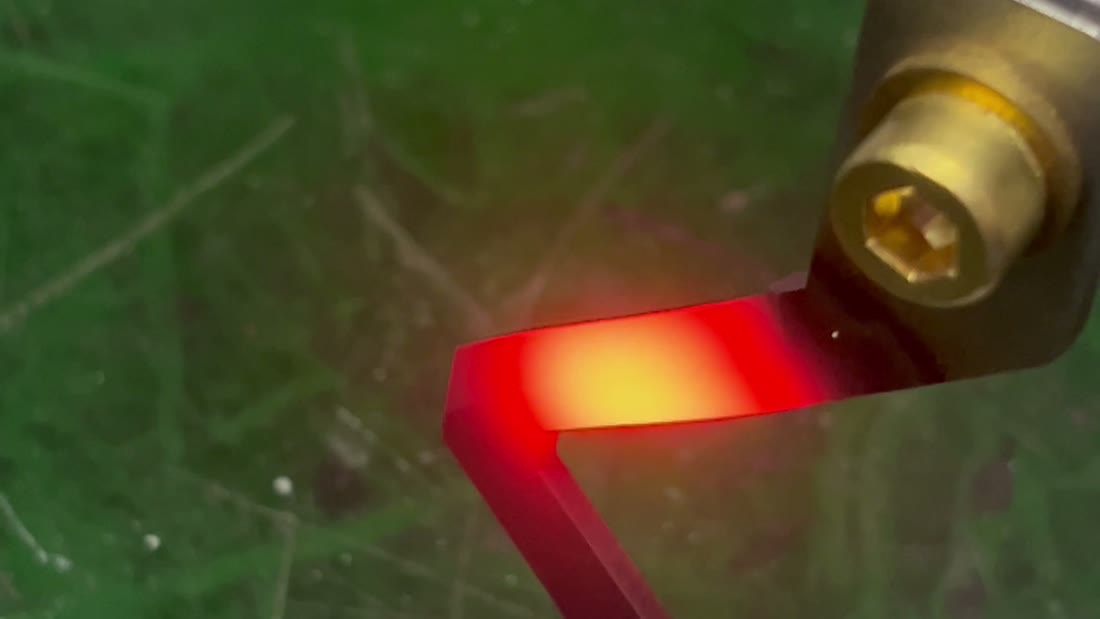 Hot-cut knife head — blade carrier and sealing edge
What we need from you
- MaterialNylon / polyester / PP, construction, coating or laminating if any.
- GeometryWidth and thickness range — the widest and thickest case matters most.
- Cut patternCut lengths, cycle rate (cuts per minute or per shift), and whether lengths change often.
- MountingBench station or integration into an existing machine — photos of the station help more than drawings.